
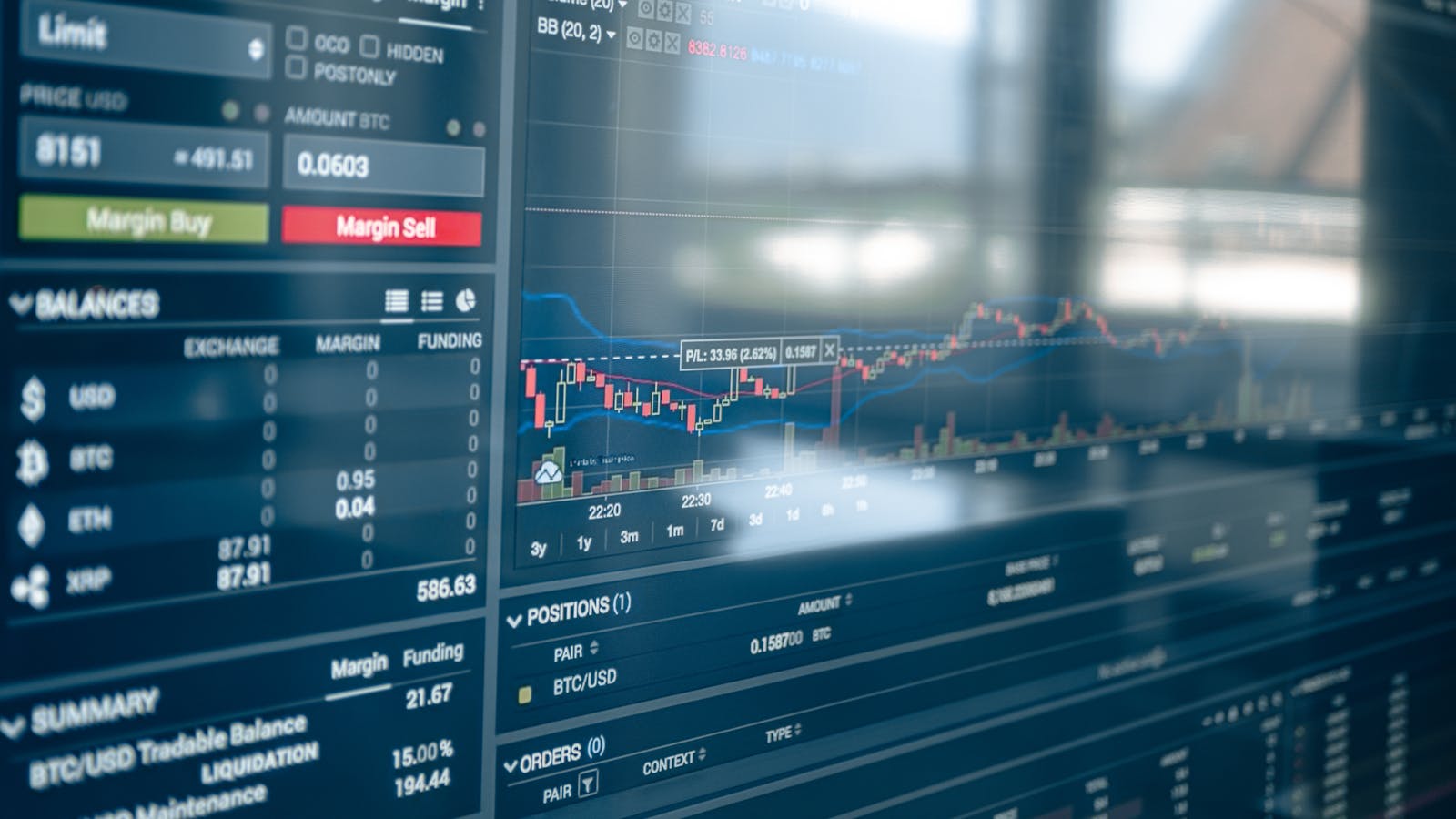
Photo via Pexels
Beginner Guide · AI Trading SafetyIs AI Trading Safe for Beginners? What You Need to Know Before You Start
The honest answer isn't yes or no — it depends entirely on which kind of "AI trading" you're actually looking at, and how you use it. Here's the breakdown beginners actually need.
If you've searched "is AI trading safe," you've probably found two extremes: breathless ads promising an AI that trades for you while you sleep, and skeptical takes calling the whole category a scam. Neither extreme is very useful when you're just trying to figure out whether to try one of these tools.
The real answer is more specific, and more reassuring: AI trading tools themselves aren't inherently risky. What's risky is skipping the steps that make any new tool — AI or not — safe to learn on. This guide walks through exactly where the real risk sits, what a genuinely beginner-safe setup looks like, and the questions worth asking before you touch real money.
The Real Answer: It Depends on Which Kind of "AI Trading" You Mean
In our pillar guide breaking down the four categories of AI trading tools, we covered screeners, research assistants, robo-advisors, and auto-trading bots. That distinction matters enormously for safety, because each one hands a different amount of control to the software.
The short version: an AI research assistant that explains its reasoning and lets you make the final call carries very different risk than a bot that executes trades on your account with no approval step. If you're brand new, starting with the former is dramatically safer than starting with the latter.
Photo via Pexels
Where the Real Risk Actually Sits
None of these risks are unique to AI. They're the same risks that have always existed in trading — AI just makes some of them easier to stumble into if you're not paying attention.
- Skipping practice and going straight to real money. The single biggest risk for beginners isn't the AI's accuracy — it's using unfamiliar software with real capital before you understand how it behaves.
- Black-box automation with no visibility. If a tool won't show you why it made a decision, you can't sanity-check it, and you can't learn from it either.
- Unrealistic income promises. Any tool or course that guarantees profits or specific returns is a red flag, full stop — no legitimate AI can promise that, because markets are inherently uncertain.
- Unregulated or unclear platforms. Know whether you're dealing with a research tool, a broker, or a fund, and confirm what oversight (if any) applies to it.
- Over-trusting the output. Treating an AI's suggestion as certainty rather than one input among several is where good tools get misused.
What Makes an AI Trading Tool Beginner-Safe
- A paper-trading or simulated mode. You should be able to test the tool with fake money before a single real dollar is at risk.
- Visible reasoning, not just a verdict. Look for tools that show their work — the data, the pattern, the "why" — not just a buy or sell signal.
- You keep the final decision. For a first tool, favor research assistants over auto-executing bots, so you stay in control while you learn.
- Clear, honest terms. Refund policy, subscription terms, and what happens if you cancel should all be easy to find before you sign up.
- Realistic language. Legitimate tools talk about probabilities, setups, and risk — not guarantees.
Photo via Pexels
Your First 30 Days: A Safety Checklist
- Pick a research assistant, not a bot. Start with a tool that recommends rather than executes, so nothing happens without your approval.
- Paper trade for at least two full weeks. Use a simulated account before any real money touches the platform, no matter how confident you feel early on.
- Track every recommendation, right or wrong. A simple log of what the AI suggested and what actually happened builds your own judgment alongside the tool's.
- Set a real-money limit before you go live. Decide in advance the maximum you're willing to risk while you're still learning how the tool behaves in live conditions.
- Reassess after 30 days. Look at your paper-trading log honestly and decide whether the tool actually helped your decision-making before scaling up.
Frequently Asked Questions
No. If you're using a paper-trading or simulated account, there's no real capital at risk — that's exactly why practicing there first is the safest way to evaluate any tool before committing real money.
No. Most beginners start with a paper-trading account first, which requires zero real capital, then move to real money gradually and only with an amount they're fully comfortable risking.
It depends entirely on the platform. Research and education tools are generally not regulated the way brokerages are, which is exactly why reading the terms and understanding exactly what you're using matters before you rely on it.
Look for realistic language (probabilities, not guarantees), visible reasoning behind recommendations, a real paper-trading option, and clear refund terms. Be cautious of anything promising specific, guaranteed returns.
Start in a simulated or paper-trading account, track the tool's recommendations against what actually happens for a few weeks, and only move to real money once you understand how it behaves and you're comfortable with your own risk limit.
Once you understand where the real risk lives, the practical next question is simple: does the specific tool you're looking at actually follow this safer structure? That's exactly what we dig into in our full review.
Want to see a Research-style AI Trading Assistant in action?
Sean Donahoe has a Proven and tested Five-days, hands-on MasterClass where you build your own AI Research Assistant from scratch — the same kind of tool described above — and practice everything in a paper-trading account before any real money is involved. It will be explained in Detail about the AI Trading Assistant and MasterClass in the Early Bird Webinar, so Register for the Free Webinar 👍
Register for the AI Trading Engine Webinar ✔️ →Affiliate disclosure: This article contains an affiliate link. If you register or enroll through it, we may earn a commission at no extra cost to you. We only link to programs we've personally researched.
Risk note: Trading involves risk, including the potential loss of money. Nothing in this article is financial advice. Always practice with paper trading first and consider speaking with a licensed financial advisor before risking real capital.
Post a Comment